
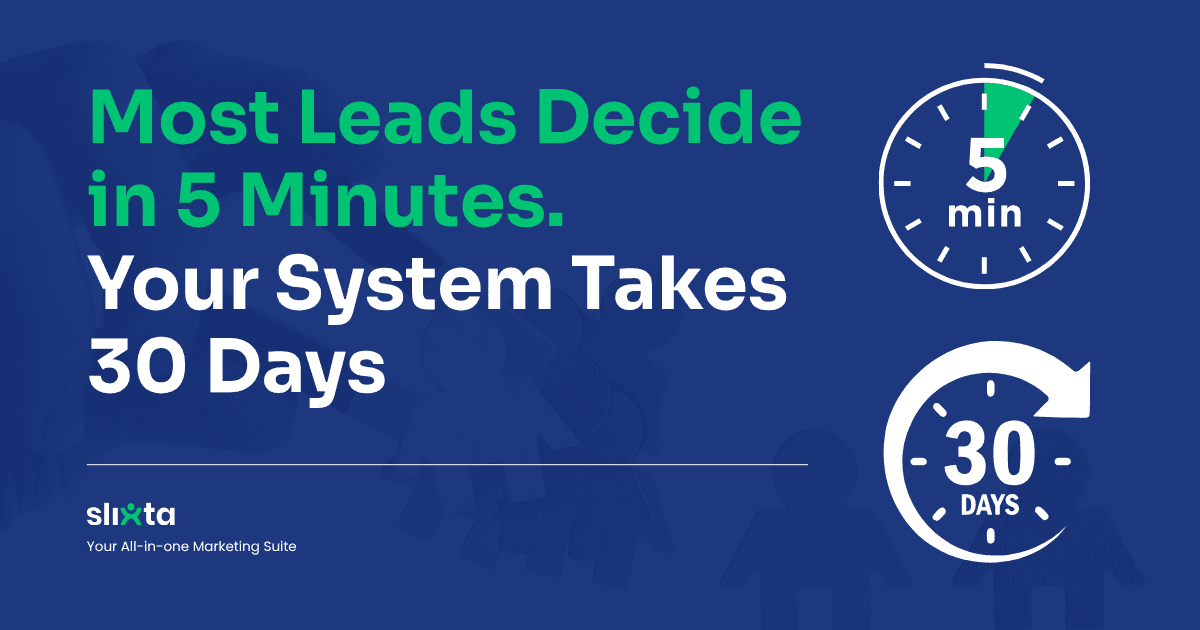
Most leads act on peak intent within minutes. Slow responses and delayed follow-ups cause drop-offs, making speed and immediate engagement critical for higher conversions.
Most leads don’t go cold because they lost interest. They go cold because your system wasn’t fast enough to meet them when their intent was at its peak.
In modern buying journeys, conversion is less about persuasion over weeks and more about response within minutes, yet many pipelines are still built for a slower era.
The problem isn’t demand. It’s timing.
And understanding what happens in those first few minutes is where this entire problem can be solved.
The Psychology of the Five-Minute Window: Intent Peaks and Fades
At the heart of this issue lies basic human psychology, particularly what Google calls "micro-moments." These are those brief, intense periods when someone feels a strong urge to learn more, explore options, or make a purchase. When a lead fills out your form or messages your site, they enter this peak state, their motivation is high, and mental barriers like second-guessing or competitor distractions haven't fully formed yet. Capturing them here means riding a wave of natural enthusiasm straight to a close.
A key driver of this is the Zeigarnik effect, discovered by psychologist Bluma Zeigarnik in the 1920s through simple experiments. Here's how it works in clear steps: First, people naturally remember and fixate on unfinished tasks more than completed ones because open loops create mental tension. Second, this tension pushes us to resolve them quickly. Third, once resolved (like finishing a meal or a project), the memory fades fast.
Apply this to leads: When someone submits your form, it creates an "open loop" in their mind "I need help with this problem right now." A fast response closes the loop positively, strengthening your position in their memory and driving the sale. Ignore it, and the loop weakens amid daily distractions, making them forget you entirely. This is why delayed systems fail, they let natural psychology work against you rather than for you.
Many CRMs still operate on manual processes from a slower, pre-smartphone era, which only worsens the problem. A lead comes in, but it sits in a queue while someone manually routes it to the right team member, and responses get delayed as reps juggle priorities. By the time you connect, the lead's peak intent has passed, and they've shifted attention elsewhere. Supporting data from Drift illustrates the stakes: Teams that reply within five minutes see 21 times more conversions than those taking five hours, proving that aligning with psychological speed trumps sheer lead volume every time.
Why 30-Day Funnels Fall Short in Today's Fast Market
You might think a structured 30-day nurture sequence - emails, webinars, and follow-up calls - builds value over time, but it often backfires for hot leads. These sequences assume everyone starts cold and needs heavy education, when in reality, fresh leads burn brightest early on. Each delay adds friction: Internal approvals slow routing, generic emails feel impersonal after the initial spark, and by week two, the lead has cooled off completely.
Experienced marketers combat this through "friction mapping," a technique where you diagram every step from lead capture to close and identify slowdowns. In Account-Based Marketing (ABM), for instance, success comes from high-velocity personalization rather than broad blasts. Traditional attribution models also mislead here, crediting later touches while ignoring that 70-80% of drop-offs happen in the first hour, as Forrester reports. Switching to velocity-focused attribution reveals the truth and helps allocate budgets to speed tools.
Three Proven Levers to Seize Peak Intent
High-performing teams fix this by implementing systems that eliminate delays and ensure consistent action. Here are the core levers, explained with practical steps.
- Instant Routing to Eliminate Internal Bottlenecks
Manual assignment creates unnecessary waits as leads bounce between inboxes. Instead, auto-routing analyzes factors like geographic location, lead source, and context to deliver it directly to the most qualified rep. This means a late-night inquiry from a high-potential region lands with someone ready to respond, without any handoff drama. Solutions like Slixta execute this in seconds, keeping momentum unbroken from the start. - First Response on Channels Leads Actually Use
Relying solely on email misses the mark, with open rates lingering around 20%. In regions like India, WhatsApp boasts 98% open rates and sets expectations for immediate replies. The goal is a tailored first message that acknowledges their need and asks a smart question, such as "Thanks for sharing your scaling challenge, which location are you targeting?" Bots make this instant and scalable. Slixta integrates these WhatsApp responses seamlessly post-form submission, transforming passive leads into engaged conversations. - Automated Sequences for Reliable Pursuit
A single reply isn't enough to nurture intent, yet manual tracking causes 79% of leads to fall through the cracks, per Forrester. Build structured automations: A Day 1 confirmation, Day 3 value-packed resource, and Day 7 targeted proof. Trigger them based on behavior, like sending a video if they go silent. Slixta handles these without depending on team habits, ensuring no lead escapes due to oversight.
Combined, these levers create compounding effects. Data from LeadResponseManagement shows five-minute responses can boost close rates by up to 391%.
Benchmarks and Metrics for Measuring Success
To track progress, adopt benchmarks from top performers. Harvard Business Review highlights that elite sales teams convert 28% of leads compared to an industry average of 2%, largely due to superior speed. Key metrics include time-to-first-response (aim for under five minutes), routing efficiency (under 30 seconds), and follow-up completion (above 70%). Analytics in modern tools pinpoint issues, such as a 40% drop in early routing stages.
The Imperative: Velocity or Vanish
Leads won't wait for your legacy systems. In a world where attention spans shrink and competitors lurk, five-minute velocity isn't a nice-to-have, it's survival. The need is clear: Capture intent at its peak, or watch 80% evaporate. Manual processes and 30-day drags belong in the past; the future demands instant, intelligent action that turns every submission into sustained momentum.
Slixta stands as the critical enabler here. It doesn't just patch delays, it rebuilds your entire lead flow for speed: Auto-routing that thinks like your best reps, WhatsApp bots that engage instantly, and sequences that pursue relentlessly. Without it, you're betting on hope over horsepower. With it, you claim the edge that elite teams use to dominate. Audit your pipeline today. Upgrade to velocity. The five-minute window is open, Slixta ensures you never miss it.